 EN
EN

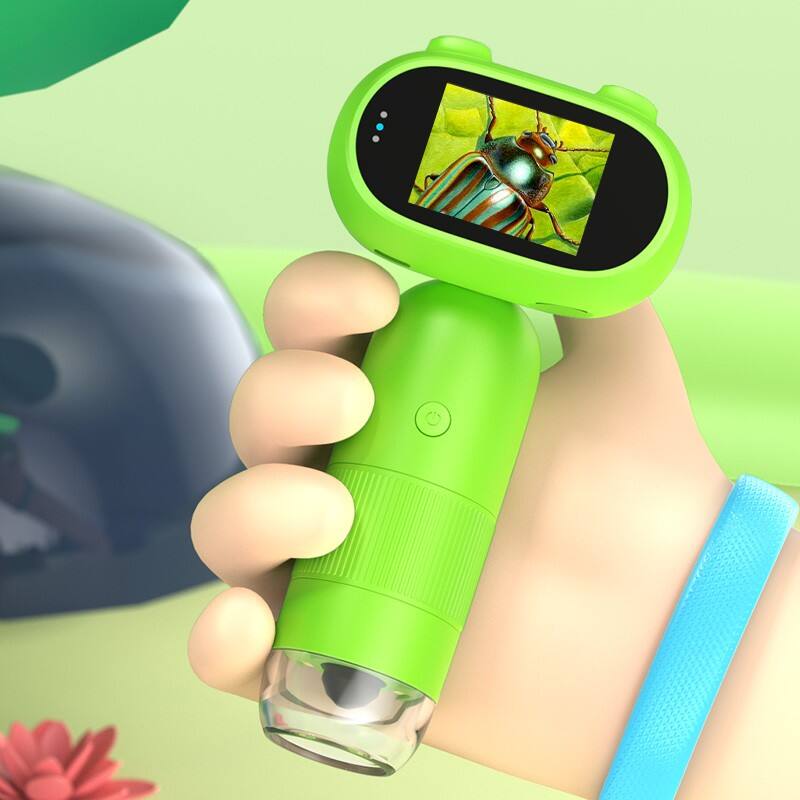
Modern educational tools are transforming how children explore and understand the microscopic world around them. The kids digital microscope represents a revolutionary leap from traditional optical microscopes, offering young learners an engaging gateway to scientific discovery. These innovative devices combine advanced digital imaging technology with child-friendly interfaces, making complex scientific concepts accessible and exciting for developing minds.
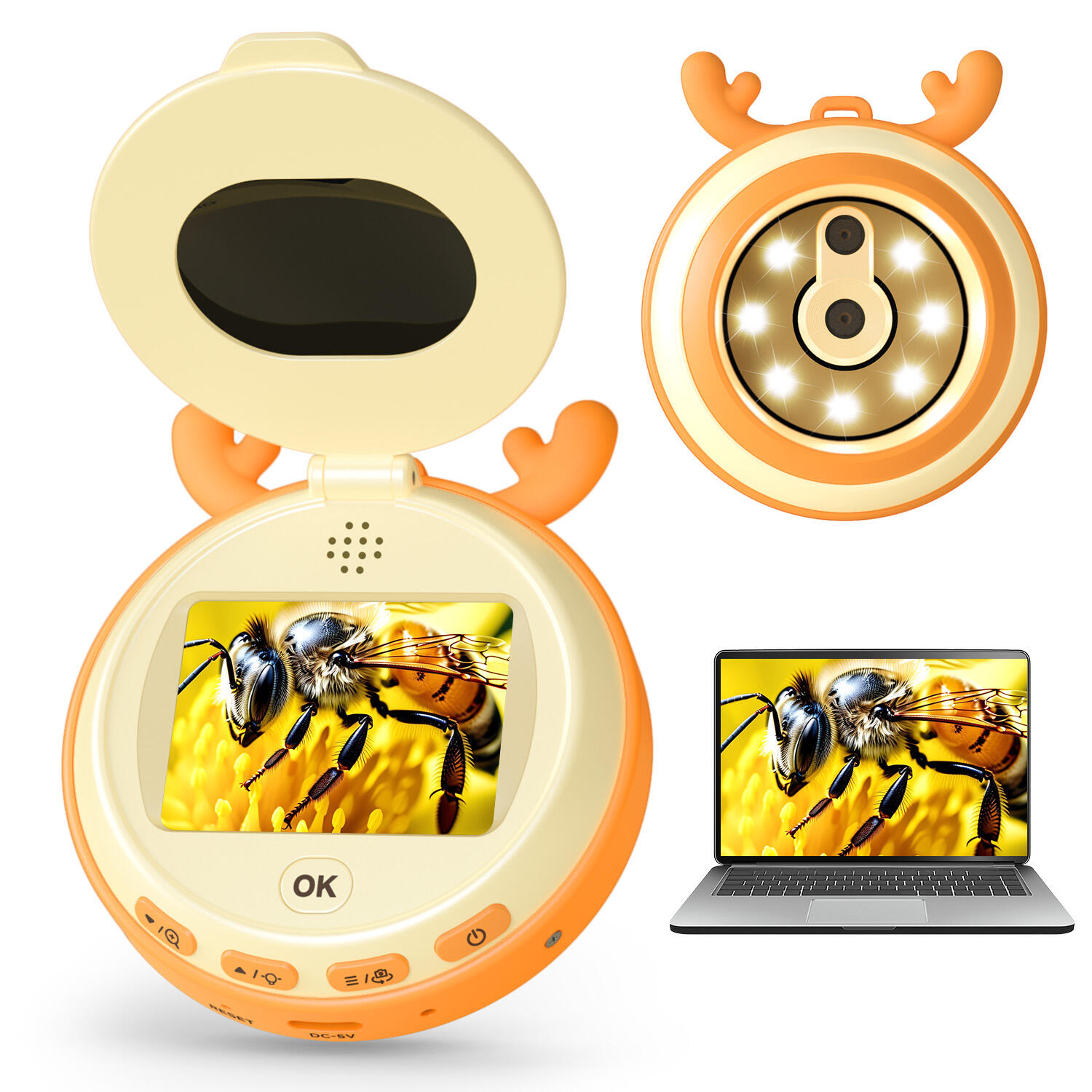
The educational benefits of a kids digital microscope extend far beyond simple magnification, creating immersive learning experiences that develop critical thinking skills, scientific methodology, and natural curiosity. Unlike conventional microscopes that can be challenging for young users to operate, digital versions feature intuitive controls, clear displays, and interactive capabilities that encourage prolonged exploration and deeper engagement with scientific principles.
Cognitive Development Through Microscopic Exploration
Enhanced Observation Skills and Attention to Detail
A kids digital microscope fundamentally transforms how children observe and process visual information. When young learners examine specimens through digital magnification, they develop heightened attention to detail and learn to identify subtle patterns, textures, and structures that would otherwise remain invisible. This enhanced observation capability transfers to other areas of learning, improving their ability to notice fine details in reading, mathematics, and artistic endeavors.
The digital interface of a modern kids digital microscope allows children to capture, save, and review their observations repeatedly. This capability reinforces memory formation and enables comparative analysis between different specimens. Children learn to document their findings systematically, developing organizational skills and scientific methodology that serve as foundational elements for advanced academic pursuits.
Regular use of a kids digital microscope also strengthens visual processing abilities and spatial reasoning skills. As children navigate through different magnification levels and focus adjustments, they develop better understanding of scale, proportion, and three-dimensional relationships. These cognitive improvements contribute to enhanced performance in STEM subjects and improved problem-solving capabilities across various academic disciplines.
Critical Thinking and Hypothesis Formation
The investigative nature of microscopic exploration naturally encourages children to form hypotheses about what they observe. A kids digital microscope provides the perfect platform for testing these theories through systematic observation and analysis. Children learn to ask meaningful questions, predict outcomes, and draw logical conclusions based on empirical evidence gathered through their microscopic investigations.
Digital microscopy enables children to document their hypothesis testing process through captured images and recorded observations. This documentation practice teaches them to maintain scientific records, compare results over time, and refine their understanding based on accumulated evidence. The ability to revisit saved images allows for deeper reflection and more sophisticated analysis of their findings.
The interactive features of a kids digital microscope encourage collaborative hypothesis formation when children work together on projects. Peer discussions about microscopic observations foster communication skills, encourage different perspectives, and teach children to consider alternative explanations for their findings. This collaborative approach to scientific inquiry builds social learning skills while reinforcing scientific concepts.
STEM Integration and Scientific Methodology
Biology and Life Science Foundation
A kids digital microscope serves as an essential gateway to biological sciences, allowing children to observe living organisms, plant structures, and cellular components firsthand. Through examination of pond water samples, flower petals, and insect parts, young learners develop fundamental understanding of life science concepts including cell structure, organism diversity, and biological systems. These direct observations make abstract biological concepts tangible and memorable.
The digital capabilities of modern microscopes enable children to create comprehensive biological portfolios by capturing images of various specimens they examine. This documentation process teaches them to categorize organisms, identify key characteristics, and understand taxonomic relationships. The ability to zoom in on specific features helps children recognize patterns in nature and understand how form relates to function in biological systems.
Regular biological exploration with a kids digital microscope introduces children to concepts of biodiversity and ecosystem relationships. By examining specimens from different environments, they begin to understand how organisms adapt to their surroundings and the interconnected nature of biological communities. This foundation proves invaluable for advanced biology courses and environmental science understanding.
Physical Science and Materials Analysis
Beyond biological applications, a kids digital microscope opens doors to physical science exploration through examination of crystalline structures, fabric weaves, and material compositions. Children can investigate how different materials are constructed at microscopic levels, developing understanding of atomic and molecular concepts that form the basis of chemistry and physics education.
Digital magnification allows young learners to explore concepts of states of matter by examining salt crystals, sugar formations, and ice structures. These investigations help children understand how molecular arrangements determine material properties and behavior. The visual evidence provided by microscopic examination makes abstract physical science concepts more concrete and comprehensible.
The measurement capabilities integrated into many kids digital microscope systems introduce children to quantitative analysis and mathematical applications in science. Learning to measure microscopic structures teaches concepts of scale, unit conversion, and data collection that support mathematical skill development while reinforcing scientific methodology.
Creative Learning and Artistic Development
Visual Arts and Pattern Recognition
The stunning visual imagery captured through a kids digital microscope provides inspiration for artistic creativity and aesthetic appreciation. Children discover intricate patterns, vibrant colors, and geometric structures in natural specimens that spark artistic imagination and encourage creative expression. These microscopic discoveries often translate into art projects, drawings, and design concepts that blend scientific observation with artistic interpretation.
Digital microscopy reveals symmetrical patterns, fractal structures, and color variations that teach children about mathematical principles in nature while developing their aesthetic sensibilities. The ability to capture and manipulate these images digitally introduces basic concepts of digital art and image processing, connecting traditional artistic skills with modern technology applications.
The detailed textures and structures visible through a kids digital microscope help children understand concepts of texture, form, and composition that enhance their observational drawing skills. By sketching what they observe microscopically, children develop better hand-eye coordination and learn to translate three-dimensional observations into two-dimensional representations.
Photography and Digital Media Skills
Modern kids digital microscope systems include photography capabilities that introduce children to digital imaging concepts and technical skills. Learning to adjust lighting, focus, and magnification to capture optimal images teaches basic photography principles while reinforcing scientific observation techniques. These technical skills provide foundation for more advanced photography and digital media applications.
The process of organizing, editing, and presenting microscopic images helps children develop digital literacy skills that are increasingly important in modern education. Creating portfolios of their microscopic discoveries teaches file management, image editing basics, and presentation skills that support academic success across multiple subjects.
Sharing microscopic discoveries with family and friends through digital platforms encourages children to communicate their scientific findings effectively. This sharing process develops presentation skills, scientific communication abilities, and confidence in discussing their discoveries with others.
Social Learning and Collaborative Exploration
Peer Interaction and Shared Discovery
A kids digital microscope naturally facilitates collaborative learning experiences when children work together to explore specimens and share observations. The digital display allows multiple children to view the same magnified image simultaneously, encouraging discussion, comparison of observations, and collective hypothesis formation. These collaborative experiences teach children to value different perspectives and learn from peer insights.
Group microscopy projects encourage children to divide responsibilities, share equipment respectfully, and coordinate their investigations effectively. These collaborative skills translate to improved teamwork abilities in academic settings and social situations. Children learn to communicate their findings clearly, listen to alternative interpretations, and build upon each other's discoveries.
The excitement of microscopic discovery becomes contagious when children share their findings with peers, creating positive associations with scientific learning and encouraging continued exploration. This social reinforcement helps maintain long-term interest in scientific subjects and builds confidence in STEM-related activities.
Family Engagement and Intergenerational Learning
The accessibility and user-friendly nature of a kids digital microscope makes it an excellent tool for family science activities that bridge generational gaps. Parents and grandparents can easily participate in microscopic exploration with children, creating shared learning experiences that strengthen family bonds while reinforcing educational content. These intergenerational interactions often lead to rich discussions about science, nature, and discovery.
Family microscopy sessions provide opportunities for adults to model scientific curiosity and demonstrate that learning continues throughout life. When children see adults expressing wonder and asking questions about microscopic discoveries, it reinforces the value of lifelong learning and scientific inquiry. These positive role modeling experiences significantly impact children's attitudes toward education and intellectual growth.
The documentation capabilities of digital microscopes enable families to create lasting records of their shared scientific adventures. Building family science portfolios strengthens memories of learning experiences and provides reference materials for future explorations. These documented discoveries often become treasured family keepsakes that celebrate intellectual curiosity and shared wonder.
FAQ
What age group benefits most from using a kids digital microscope?
Children between ages 6 and 14 typically gain the most educational benefits from a kids digital microscope, though younger children can enjoy guided exploration with adult supervision. At this age range, children have developed sufficient fine motor skills to operate the controls while possessing the cognitive capacity to understand and appreciate microscopic discoveries. The digital interface makes these devices more accessible than traditional microscopes for developing users.
How does a kids digital microscope improve academic performance?
Regular use of a kids digital microscope enhances academic performance through improved observation skills, critical thinking development, and hands-on reinforcement of STEM concepts. Children who engage in microscopic exploration typically demonstrate better attention to detail, enhanced problem-solving abilities, and stronger scientific methodology skills that transfer to classroom success. The visual learning component particularly benefits children who struggle with abstract concepts in traditional textbook formats.
Can kids digital microscopes be used for both educational and recreational purposes?
Absolutely, a kids digital microscope seamlessly blends educational content with entertainment, making learning feel like play rather than work. Children often spend hours exploring household items, natural specimens, and everyday objects, discovering fascinating details that spark curiosity and wonder. This recreational exploration naturally reinforces educational concepts while maintaining high levels of engagement and interest in scientific discovery.
What types of specimens work best with kids digital microscopes?
A kids digital microscope works excellently with flat or thin specimens such as flower petals, leaves, fabric samples, salt crystals, and prepared slides. Transparent or semi-transparent materials typically provide the clearest images, though many modern digital microscopes include top lighting for examining opaque objects like coins, rocks, and insect parts. Starting with easily obtained household and garden specimens helps children build confidence before progressing to more specialized samples.