 EN
EN

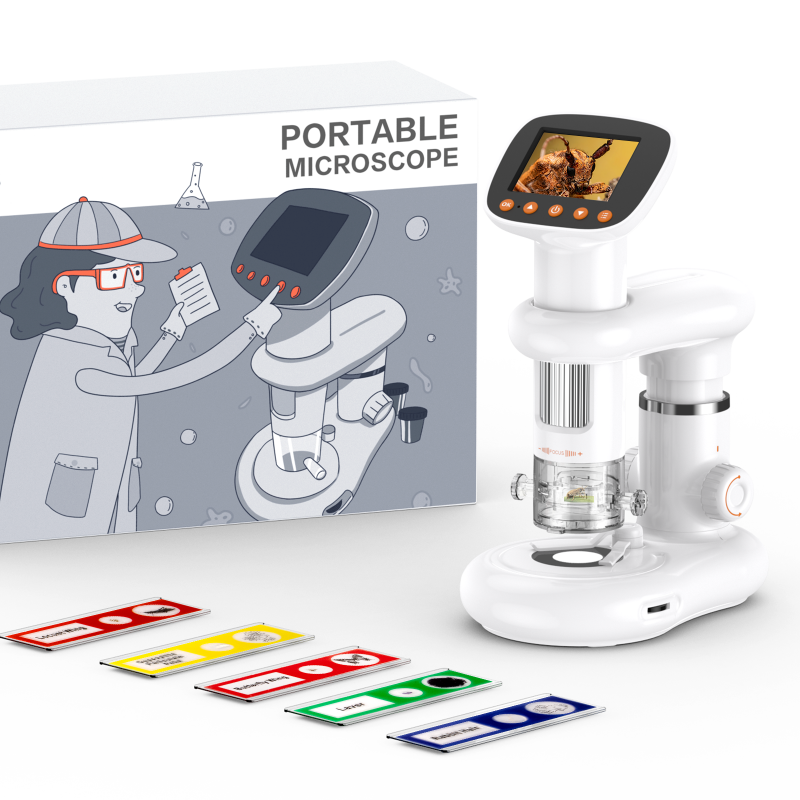
A kids digital microscope opens up an incredible world of discovery that transforms ordinary objects into fascinating visual adventures. Unlike traditional microscopes that require complex adjustments and eyepiece viewing, modern digital microscopes designed for children feature user-friendly interfaces with built-in screens that make microscopic exploration accessible and exciting for young scientists aged 4-12 years old.
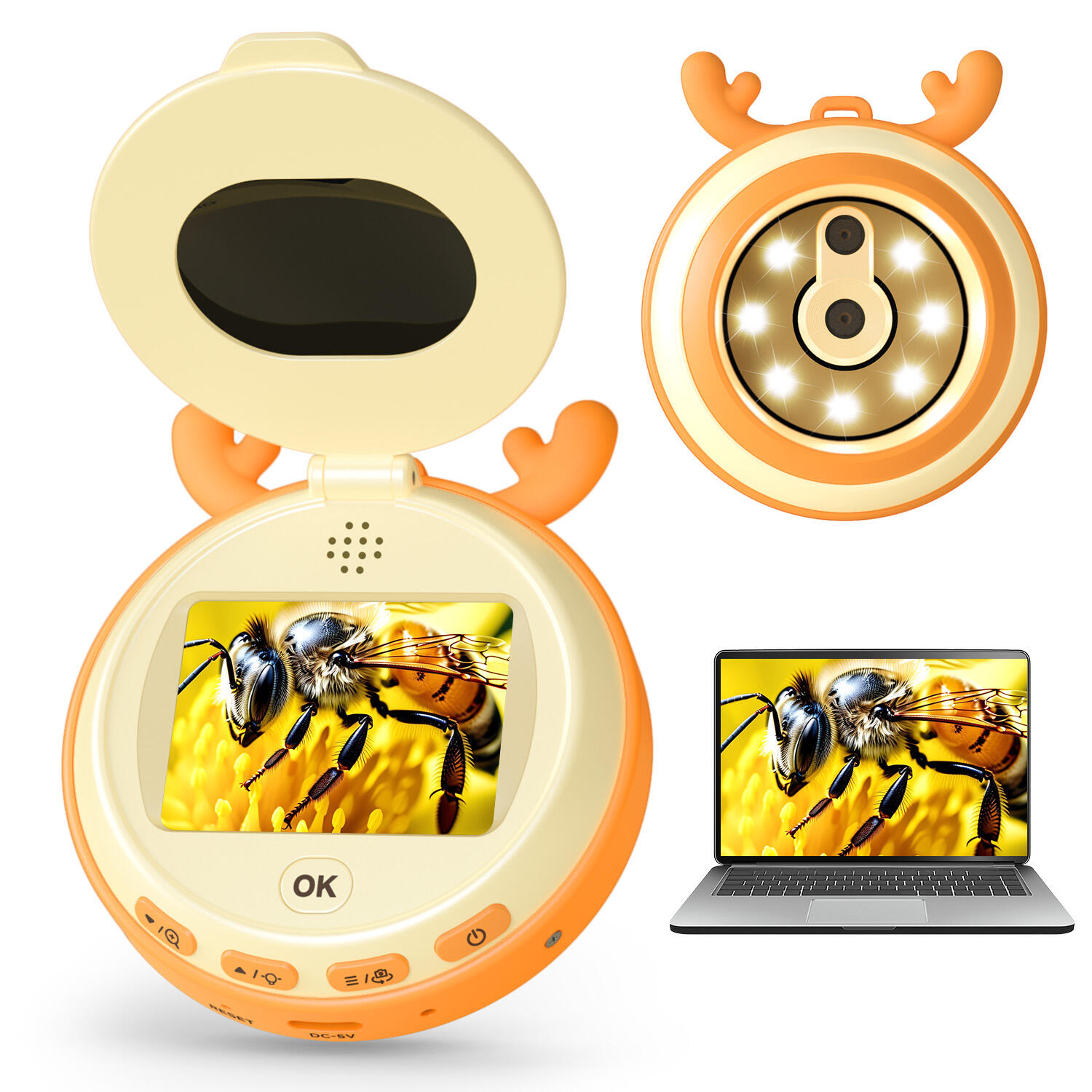
The true magic happens when children begin exploring the five most captivating specimens that reveal hidden details invisible to the naked eye. From everyday household items to natural specimens collected during outdoor adventures, a kids digital microscope transforms simple curiosity into structured scientific observation that builds critical thinking skills while maintaining the wonder and excitement of discovery.
Discovering the Microscopic World of Common Household Items
Salt Crystals and Sugar Structures
Table salt becomes a stunning crystalline landscape when viewed through a kids digital microscope, revealing perfect cubic formations that look like tiny glass buildings. Children can observe how different types of salt create varying crystal patterns, with sea salt showing more irregular shapes compared to refined table salt. The digital magnification allows young explorers to see individual salt crystals clearly on the built-in screen, making this observation both educational and visually striking.
Sugar crystals present an equally fascinating view, displaying their characteristic angular structures that appear like clear geometric gems under magnification. When children compare different sugar types such as granulated sugar, brown sugar, and powdered sugar, they discover how processing affects crystal formation and size. This hands-on exploration helps children understand basic chemistry concepts while developing observation skills that form the foundation of scientific inquiry.
Fabric Fibers and Textile Patterns
The fabric from clothing, blankets, and household textiles reveals intricate weaving patterns that demonstrate engineering principles in everyday materials. A kids digital microscope shows children how cotton fibers appear as twisted ribbons, while synthetic materials display smooth, uniform strands that reflect their manufactured origin. This observation helps young learners understand material science concepts and appreciate the complexity hidden in simple objects.
Different fabric textures create unique visual experiences under magnification, with velvet showing dense fiber forests and canvas revealing tight weaving patterns. Children can examine how fabric quality relates to fiber density and arrangement, building understanding of how materials are designed for specific purposes. The digital display makes these observations easy to share with parents and siblings, encouraging collaborative learning and discussion about material properties.
Exploring Natural Specimens from Outdoor Adventures
Flower Petals and Plant Structures
Fresh flower petals become stunning works of natural art when viewed through a kids digital microscope, revealing cellular structures, color patterns, and surface textures that explain how flowers attract pollinators. Children can observe the tiny ridges and valleys on petal surfaces that create their soft texture, while discovering how different flower species have evolved unique microscopic features for survival and reproduction.
Leaf surfaces provide equally fascinating viewing experiences, showing stomata (breathing pores), vein networks, and cellular patterns that demonstrate how plants process sunlight and air. The magnification capabilities of a kids digital microscope allow children to see these biological processes in action, connecting classroom science lessons with real-world observations that make learning memorable and engaging.
Insect Wings and Butterfly Scales
Insect wings display remarkable engineering when magnified, showing the intricate vein patterns that provide structural support for flight while maintaining lightweight construction. Children can examine shed cicada wings, dragonfly wings, or other naturally found specimens to understand how nature creates efficient flying machines. The transparent nature of most insect wings makes them perfect specimens for transmitted light observation on digital microscopes.
Butterfly wing scales create some of the most spectacular microscopic views available to young scientists, revealing the source of brilliant colors through microscopic structures rather than pigments alone. Each scale appears like a tiny roof tile, and different butterfly species show unique scale patterns that create their distinctive wing designs. This observation connects biology, physics, and art in ways that inspire children to pursue deeper scientific understanding.
Investigating Food Items and Kitchen Science
Fruit and Vegetable Cellular Structures
Thin slices of onion skin provide classic microscopic viewing that reveals plant cell walls, nuclei, and cellular organization in ways that make textbook diagrams come alive. A kids digital microscope allows children to prepare their own specimens safely while observing how living cells organize themselves into functional tissues. The transparency of onion cells makes cellular features clearly visible without requiring complex staining procedures.
Apple skin, grape skin, and other fruit surfaces show different cellular patterns that explain texture differences and protective functions. Children can observe how fruit cells change as fruits ripen, connecting their microscopic observations with everyday experiences of eating and food preparation. This type of investigation builds understanding of biology while using familiar materials that make science approachable and relevant to daily life.
Spices and Seasoning Particles
Ground spices become miniature landscapes under magnification, with black pepper showing wrinkled spherical particles, cinnamon revealing fibrous bark structures, and oregano displaying crushed leaf fragments that retain their cellular organization. These observations help children understand how spices are processed and why different grinding methods create different textures and flavors in cooking.
Examining various spices through a kids digital microscope creates connections between science and cultural traditions, as children discover how different spices have unique microscopic signatures that reflect their botanical origins. This investigation can lead to discussions about geography, agriculture, and food science while maintaining focus on the immediate visual discoveries that capture young attention spans.
Observing Water Life and Microscopic Ecosystems
Pond Water and Aquatic Microorganisms
A small sample of pond water or aquarium water reveals an active microscopic ecosystem filled with swimming microorganisms, algae, and tiny creatures that demonstrate principles of ecology and life science. Children can observe how these microorganisms move, feed, and interact within their aquatic environment, providing real-time examples of biological processes that textbooks can only describe in static terms.
The movement patterns of different microorganisms create engaging viewing experiences that hold children's attention while teaching important concepts about biodiversity and ecosystem function. Some organisms swim in straight lines, others spiral through the water, and still others appear to dance randomly, each movement pattern reflecting different survival strategies and biological adaptations that children can observe and discuss.
Algae Growth and Plant Microscopy
Green algae from fish tanks or outdoor water sources display beautiful cellular structures and growth patterns that illustrate how simple plants capture sunlight and produce oxygen. Children can observe chloroplasts within algae cells, seeing the green structures responsible for photosynthesis in action. This observation connects environmental science with cell biology in ways that make abstract concepts concrete and observable.
Different types of algae show varying organizational patterns, from single-celled forms to complex colonial arrangements that demonstrate how simple organisms can work together to create more complex structures. These observations through a kids digital microscope provide foundational understanding of how life organizes itself at multiple scales, from individual cells to ecosystem communities.
Creating Educational Games and Learning Activities
Microscopic Treasure Hunts
Parents and educators can design treasure hunt activities where children search for specific microscopic features in everyday objects, turning scientific observation into exciting games that maintain engagement while building systematic observation skills. These activities encourage children to look more carefully at their environment and develop hypothesis-testing abilities as they predict what different materials might reveal under magnification.
Creating observation journals where children document their microscopic discoveries helps develop scientific communication skills while building a personal collection of amazing images captured through their kids digital microscope. These journals become valuable learning resources that children can reference and share, building confidence in their scientific abilities while creating lasting memories of discovery and exploration.
Comparative Analysis Projects
Children can compare similar objects under magnification to understand how small differences create big changes in function and appearance, such as comparing different paper types, comparing synthetic and natural materials, or examining how processing changes the microscopic structure of foods. These comparative studies build critical thinking skills while reinforcing the scientific method through hands-on investigation.
Documenting these comparisons through photos and observations helps children develop data collection and analysis skills that form the foundation of scientific literacy. The immediate visual feedback provided by a kids digital microscope makes these analytical processes accessible and engaging for young learners who might struggle with more abstract scientific concepts.
FAQ
What magnification level works best for viewing these five amazing specimens?
Most kids digital microscopes provide magnification ranges from 10x to 200x, which is perfect for observing salt crystals, fabric fibers, flower petals, food items, and water life. Lower magnifications (10x-50x) work well for larger specimens like flower petals and fabric, while higher magnifications (100x-200x) reveal cellular details in onion skin and microorganisms in pond water.
How should children prepare specimens safely for microscopic viewing?
Adult supervision ensures safe specimen preparation, with children learning to create thin samples using plastic knives for food items, using tweezers for delicate materials like flower petals, and collecting water samples in small containers. Most specimens require no special preparation beyond making them thin enough for light to pass through when using transmitted light features on digital microscopes.
Can children capture and save images of their microscopic discoveries?
Many kids digital microscopes include built-in cameras and memory storage that allow children to capture photos and videos of their observations, creating digital collections of their discoveries that can be shared with family and used for school projects. These features help children document their learning journey while building portfolios of scientific observations.
What additional specimens can children explore beyond these five categories?
Children can safely examine hair strands, fingerprints on clear tape, soap bubbles, pencil lead particles, paper money security features, and many other household items that reveal fascinating microscopic details. The key is encouraging curiosity while maintaining safety guidelines and focusing on specimens that provide clear, engaging visual results through their kids digital microscope.