 EN
EN


Microscopes are no longer confined to scientific laboratories or educational institutions. Today, an increasing number of adults are discovering the fascinating world of microscopy as a creative hobby that combines scientific curiosity with artistic expression. These optical instruments open up hidden universes in everyday objects, transforming ordinary materials into extraordinary visual experiences. Whether you're interested in exploring the intricate patterns of plant cells, examining the crystalline structures of salt grains, or documenting the microscopic architecture of insects, microscope adults find endless opportunities for creative exploration and learning.
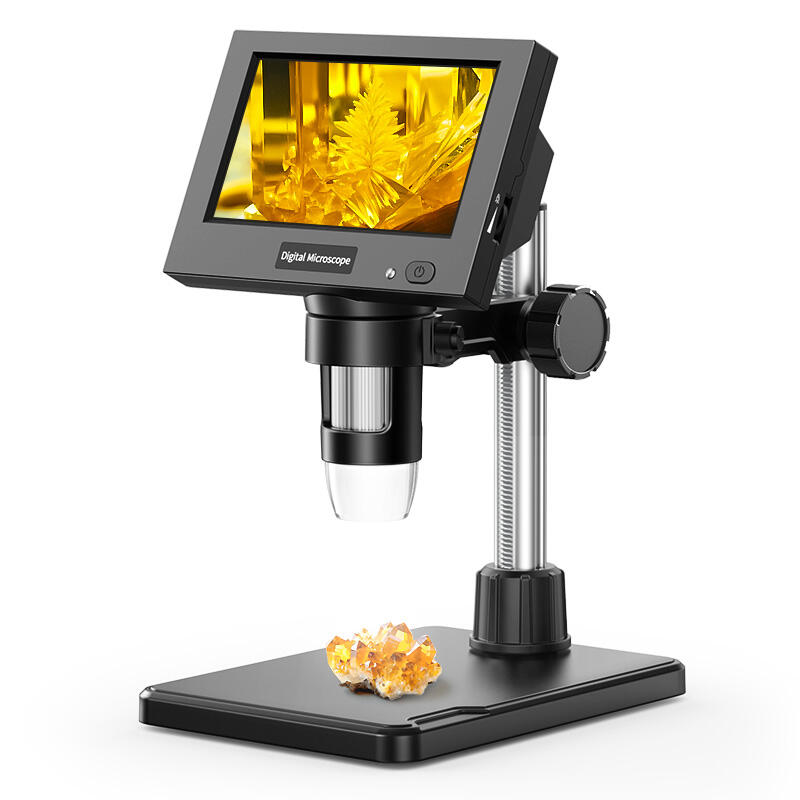
The appeal of microscopy as an adult hobby lies in its unique blend of technical skill development, artistic creativity, and continuous discovery. Modern digital microscopes make this pursuit more accessible than ever before, offering high-resolution imaging capabilities, user-friendly interfaces, and the ability to capture and share microscopic discoveries. For microscope adults, this hobby represents a perfect intersection of science and art, where technical precision meets creative vision to produce stunning images and meaningful insights about the microscopic world that surrounds us daily.
Getting Started with Adult Microscopy Projects
Choosing Your First Microscope Setup
Selecting the right microscope is crucial for microscope adults beginning their journey into this captivating hobby. Digital microscopes with LCD screens offer several advantages for hobbyists, including easier viewing, the ability to capture images and videos, and reduced eye strain during extended observation sessions. When choosing equipment, consider factors such as magnification range, image resolution, lighting options, and connectivity features that allow you to document and share your discoveries.
Modern microscopes designed for microscope adults often feature variable magnification levels, typically ranging from 10x to 200x or higher, providing versatility for different types of specimens and projects. LED lighting systems ensure consistent illumination and longer operational life compared to traditional bulb systems. Some models include adjustable stages and fine focus controls that enable precise specimen positioning and clear image capture, essential features for serious hobbyists.
Essential Accessories and Preparation Tools
Beyond the microscope itself, microscope adults need several accessories to maximize their creative potential. Prepared slides offer an excellent starting point for beginners, featuring professionally mounted specimens that showcase various microscopic structures. However, creating your own specimens provides greater creative freedom and learning opportunities. Basic preparation tools include glass slides, coverslips, tweezers, droppers, and various staining solutions.
Specimen collection tools expand the possibilities for microscope adults to gather interesting materials from their environment. Small containers, magnifying glasses for initial specimen selection, and basic dissection tools help in preparing samples from nature. Digital storage solutions become important as your collection of microscopic images grows, requiring organized filing systems to catalog your discoveries and creative projects.
Creative Project Ideas for Microscope Enthusiasts
Botanical Microscopy and Plant Studies
Plant materials offer endless possibilities for microscope adults interested in combining scientific observation with artistic documentation. Flower petals reveal intricate cellular patterns and pigment distributions that create stunning visual compositions. Leaf cross-sections display complex vascular structures and cellular arrangements that vary dramatically between different plant species. These natural patterns often inspire artistic interpretations and can be documented to create beautiful collections of botanical imagery.
Pollen grains represent another fascinating subject for microscope adults, as each species produces uniquely shaped and textured pollen with distinctive characteristics. Collecting pollen samples from different flowers throughout the seasons creates opportunities for comparative studies and artistic documentation. Wood samples, bark textures, and seed structures also provide rich material for microscopic exploration, revealing the hidden architectural details that make plants such remarkable organisms.
Crystal Formation and Mineral Studies
Crystallization projects offer microscope adults the opportunity to witness and document the formation of beautiful geometric structures in real-time. Simple solutions of salt, sugar, or Epsom salt can be prepared and observed as they evaporate, creating fascinating crystal formations with distinctive shapes and patterns. This type of project combines chemistry knowledge with artistic documentation, as the resulting crystals often display remarkable symmetry and color variations.
More advanced crystallization experiments involve creating supersaturated solutions and controlling cooling rates to influence crystal size and formation patterns. Microscope adults can document the entire crystallization process, creating time-lapse sequences that show how microscopic crystals develop and grow. Different chemicals produce vastly different crystal shapes and colors, providing endless material for creative exploration and scientific documentation.
Textile and Fabric Analysis
The microscopic examination of textiles opens up a unique creative domain for microscope adults interested in combining material science with artistic appreciation. Natural fibers like cotton, wool, silk, and linen each display distinctive microscopic characteristics that reflect their biological origins. Cotton fibers show twisted ribbon-like structures, while wool displays overlapping scale patterns that create its unique properties.
Synthetic textiles present different but equally fascinating structures under microscopic examination. Polyester, nylon, and other manufactured fibers often display uniform, geometric patterns that contrast sharply with the organic irregularities of natural materials. Microscope adults can create comparative studies documenting these differences, building collections that showcase the diversity of textile structures and their relationship to fabric properties and performance.
Advanced Techniques and Creative Applications
Photomicrography and Artistic Documentation
Photomicrography transforms microscopic observations into shareable art forms, allowing microscope adults to document and display their discoveries in visually compelling ways. Digital microscopes with high-resolution cameras enable the capture of detailed images that can be processed and enhanced using standard photo editing software. Understanding lighting techniques, such as brightfield, darkfield, and polarized light microscopy, dramatically expands the creative possibilities for image creation.
Advanced photomicrography techniques include focus stacking, where multiple images taken at different focal planes are combined to create images with greater depth of field than possible with single exposures. This technique is particularly valuable for microscope adults working with three-dimensional specimens or complex structures that extend beyond the shallow depth of field typical in microscopy. Color enhancement and contrast adjustment can reveal subtle details and create more visually striking presentations of microscopic subjects.
Time-Lapse and Dynamic Studies
Dynamic microscopy projects involve observing and documenting changes over time, creating fascinating insights into processes that occur too slowly for real-time observation. Microscope adults can document crystal formation, plant growth, bacterial cultures, or chemical reactions using time-lapse photography techniques. These projects require patience and careful planning but produce remarkable results that showcase the dynamic nature of microscopic processes.
Setting up time-lapse experiments requires stable mounting systems and consistent lighting conditions over extended periods. Environmental controls may be necessary for biological specimens, including temperature and humidity management. The resulting time-lapse sequences can be compiled into videos that compress hours or days of microscopic activity into minutes of captivating footage, revealing processes invisible to normal observation.
Building a Microscopy Community and Sharing Discoveries
Documentation and Record Keeping
Successful microscopy hobbies require systematic documentation to track discoveries, techniques, and creative progress. Microscope adults benefit from maintaining detailed logs that record specimen sources, preparation methods, microscope settings, and observations. Digital photography makes it possible to create comprehensive visual records that can be organized by subject matter, date, or project type.
Creating detailed metadata for microscopic images enhances their value for future reference and sharing with other enthusiasts. Information about magnification levels, lighting conditions, specimen preparation methods, and equipment used helps other microscope adults reproduce interesting results and learn from documented techniques. Online platforms and social media groups dedicated to microscopy provide venues for sharing discoveries and receiving feedback from experienced practitioners.
Educational and Outreach Opportunities
Many microscope adults find fulfillment in sharing their hobby with others through educational activities and community outreach. Local schools, science museums, and community centers often welcome volunteers who can demonstrate microscopy techniques and share the excitement of microscopic discovery with younger audiences. These activities help promote scientific literacy while providing opportunities for hobbyists to refine their communication skills and deepen their own understanding.
Organizing microscopy clubs or joining existing scientific societies creates opportunities for microscope adults to collaborate on projects, share resources, and learn advanced techniques from experienced practitioners. Group activities might include field trips to collect specimens, workshops on specialized techniques, or collaborative documentation projects that combine the efforts of multiple observers to create comprehensive studies of particular subjects or phenomena.
FAQ
What magnification range is best for adult microscopy hobbies?
For most adult microscopy hobbies, a magnification range of 10x to 200x provides excellent versatility for examining a wide variety of specimens. This range allows observation of larger cellular structures, crystal formations, and textile fibers while still providing sufficient detail for creative documentation. Higher magnifications require more specialized techniques and may be less practical for general hobbyist applications.
Can I use a microscope for both scientific observation and artistic projects?
Absolutely. Modern digital microscopes are perfectly suited for both scientific documentation and artistic creation. The same equipment used to study plant cell structures can create beautiful artistic images when combined with creative lighting techniques and thoughtful composition. Many microscope adults find that the boundary between science and art becomes beautifully blurred in microscopy projects.
How much should I expect to spend on a quality microscope setup?
A good entry-level digital microscope suitable for adult hobbies typically costs between $200 and $800, depending on features like magnification range, image resolution, and build quality. Additional accessories like prepared slides, specimen preparation tools, and storage solutions may add another $100 to $300 to the initial investment. This represents excellent value considering the years of creative exploration and learning opportunities provided.
What are the most rewarding types of specimens for beginning microscope adults?
Prepared slides of plant and animal tissues offer excellent starting points for new microscope adults, providing guaranteed interesting views while you develop your observation skills. Fresh materials like flower petals, leaves, salt crystals, and fabric samples are easily accessible and produce consistently fascinating results. These specimens require minimal preparation while offering immediate gratification and clear examples of microscopic structures and patterns.