 EN
EN

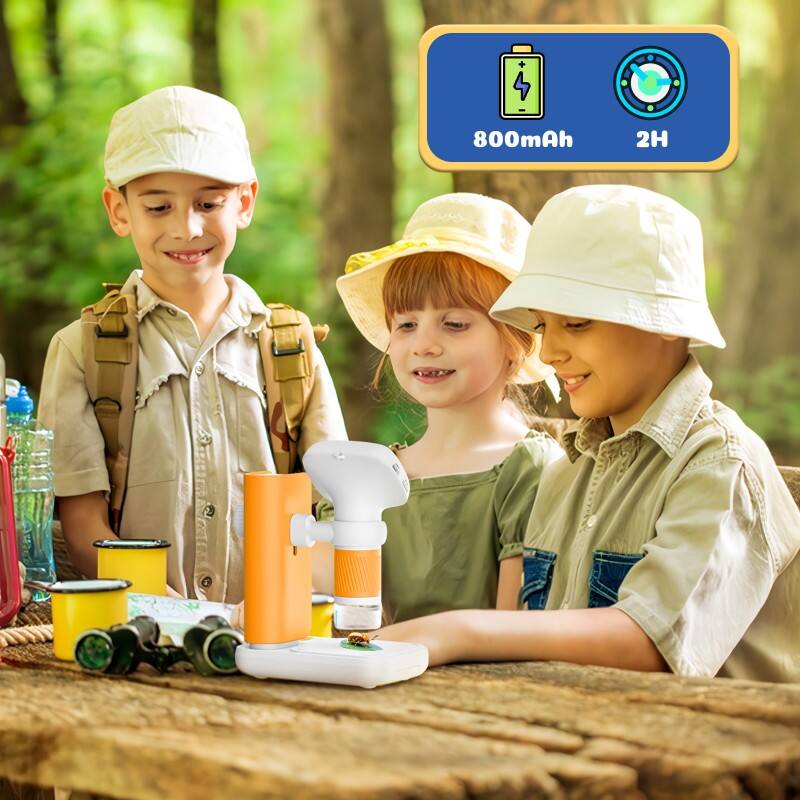
Choosing the right microscope for kid scientists can ignite a lifelong passion for discovery and learning. When parents consider educational tools that combine fun with scientific exploration, a high-quality microscope for kid use stands out as an exceptional investment. These specialized instruments open up microscopic worlds that capture young imaginations while building foundational STEM skills. The key lies in selecting a microscope that balances educational value with age-appropriate features and durability.
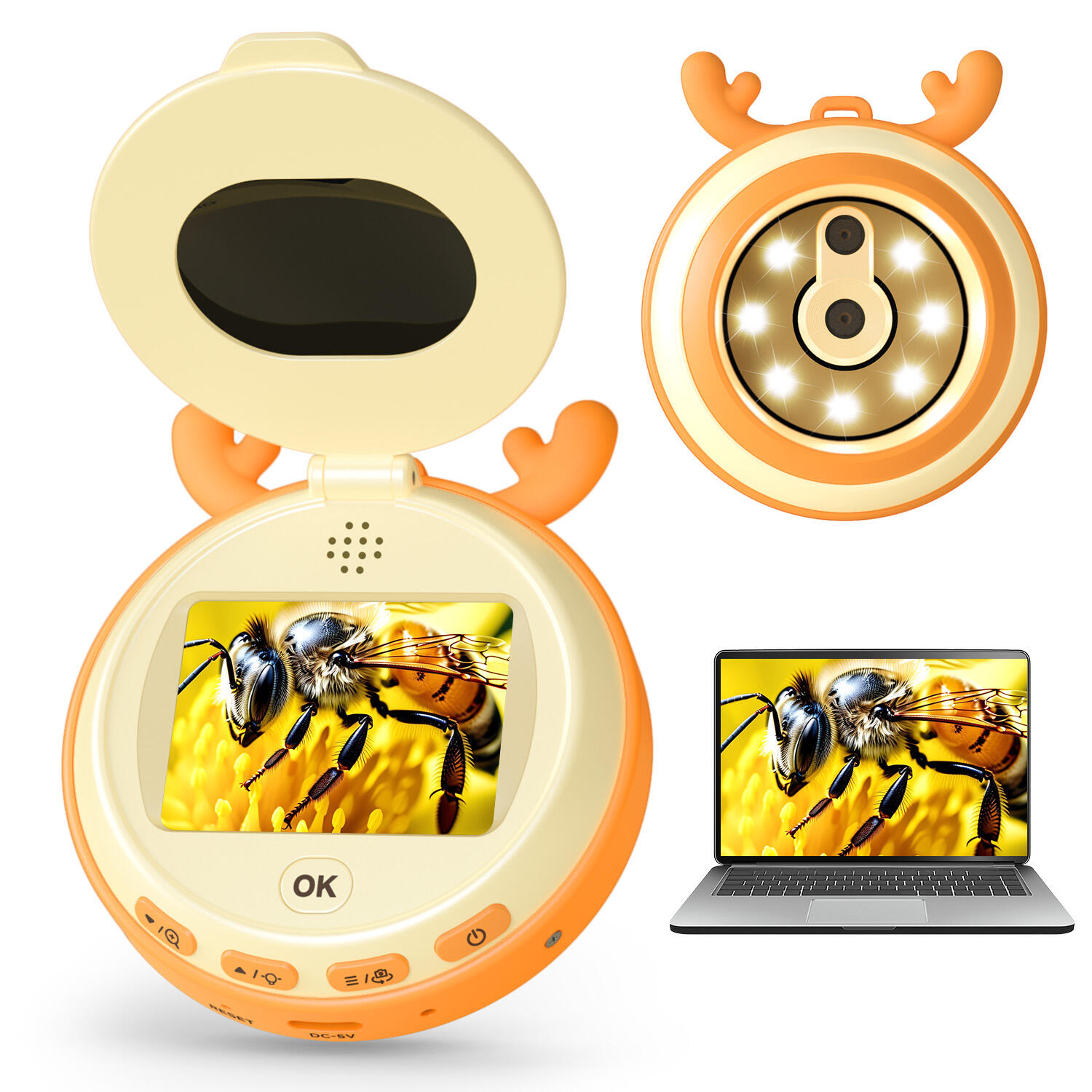
The modern microscope for kid market offers sophisticated options that were unimaginable just a few years ago. Digital integration, improved optics, and child-friendly designs have revolutionized how young scientists interact with microscopy. Understanding the essential features and considerations helps parents make informed decisions that will support their child's scientific journey for years to come.
Understanding Child-Friendly Microscope Features
Age-Appropriate Magnification Levels
The magnification power of a microscope for kid use should match the child's developmental stage and interests. Elementary-aged children typically benefit from microscopes offering magnification ranges between 40x and 400x, which provide clear views of common specimens like leaves, insects, and fabric fibers. These magnification levels allow young scientists to observe fascinating details without overwhelming them with complexity.
Higher magnification levels, while impressive, can actually hinder learning for younger children. A microscope for kid scientists should prioritize clarity over extreme magnification. The sweet spot lies in instruments that offer multiple magnification options, allowing children to gradually explore higher powers as their skills and understanding develop.
Professional-grade microscopes designed for children often include preset magnification levels that eliminate confusion. This feature ensures that young users can focus on observation and discovery rather than struggling with complex adjustments. The ability to switch between magnifications easily becomes crucial for maintaining engagement during extended exploration sessions.
Durability and Safety Considerations
Safety remains paramount when selecting a microscope for kid use, as children naturally experiment and explore with enthusiasm. Quality children's microscopes incorporate rounded edges, stable bases, and non-toxic materials throughout their construction. The optical components should be well-protected against accidental drops or bumps that are inevitable in young hands.
Construction materials play a vital role in long-term usability. A robust microscope for kid scientists should feature metal components in critical areas while incorporating lightweight materials that children can handle comfortably. The balance between durability and portability determines whether the instrument will withstand years of enthusiastic use.
Additionally, LED lighting systems have replaced traditional incandescent bulbs in modern children's microscopes. These lighting solutions remain cool to the touch, reducing burn risks while providing consistent, bright illumination. The energy efficiency of LED systems also extends battery life, ensuring uninterrupted exploration sessions.
Digital Integration and Modern Technology
Camera-Enabled Microscopes
Contemporary microscope for kid options increasingly feature integrated cameras that capture still images and videos of specimens. This digital capability transforms the microscopy experience by allowing children to document their discoveries and share them with family, friends, and teachers. The ability to review observations later reinforces learning and encourages detailed scientific observation.
High-definition cameras in quality microscopes produce images suitable for school projects and presentations. When children can easily capture and save their microscopic discoveries, they develop better documentation skills while building digital portfolios of their scientific work. This feature particularly appeals to tech-savvy young scientists who appreciate modern functionality.
The integration of cameras also enables collaborative learning experiences. Children can connect their microscope for kid use to computers or tablets, sharing live observations with remote family members or participating in virtual classroom activities. This connectivity expands the learning environment beyond physical boundaries.
Screen Display Options
Built-in screens eliminate the need for children to peer through traditional eyepieces, reducing eye strain and improving comfort during extended observation sessions. A microscope for kid use with an integrated display allows multiple viewers to observe specimens simultaneously, promoting collaborative discovery and discussion. These screens typically range from 2 to 5 inches and provide clear, bright images.
The transition from eyepiece-based viewing to screen-based observation feels natural for children accustomed to digital devices. This familiarity reduces the learning curve and encourages immediate engagement with the microscope. Parents often notice that children spend longer periods exploring when comfortable viewing options are available.
Advanced models combine both screen displays and traditional eyepieces, offering flexibility in viewing modes. This dual approach allows children to experience classical microscopy techniques while enjoying the convenience of digital displays. The versatility supports different learning styles and preferences among young scientists.
Specimen Preparation and Accessories
Essential Accessories and Tools
A comprehensive microscope for kid package should include essential accessories that support immediate exploration and learning. Quality starter kits typically contain prepared slides featuring common specimens like butterfly wings, plant cells, and textile fibers. These professionally prepared samples ensure successful initial observations and build confidence in young microscopists.
Blank slides and cover slips enable children to prepare their own specimens, developing important scientific skills. The process of creating slide preparations teaches patience, precision, and methodology while maintaining engagement through hands-on activity. Simple tools like tweezers, droppers, and stirring sticks complete the basic toolkit for specimen preparation.
Storage solutions for slides and accessories help maintain organization and protect valuable specimens. A microscope for kid use benefits from dedicated storage compartments or cases that keep everything together and easily accessible. This organization promotes independent use and responsible equipment management.
Safe Specimen Collection
Teaching children safe specimen collection practices forms an integral part of microscope education. Natural specimens like flower petals, leaves, and pond water provide endless exploration opportunities when collected responsibly. Parents should guide children in identifying appropriate collection sites and techniques that respect environmental conservation.
Household items offer excellent starter specimens for children beginning their microscopy journey. Salt crystals, fabric fibers, hair strands, and food particles create fascinating observations while remaining completely safe for young scientists. This approach eliminates concerns about potentially dangerous specimen collection while providing abundant learning opportunities.
The development of specimen collection skills encourages outdoor exploration and nature appreciation. Children learn to observe their environment with greater attention to detail, developing naturalist skills that complement their microscopic investigations. This connection between macro and micro observation enhances overall scientific understanding.
Educational Value and Learning Outcomes
STEM Skill Development
Regular use of a microscope for kid scientists builds multiple STEM competencies simultaneously. Observation skills improve dramatically as children learn to notice fine details and patterns invisible to the naked eye. These enhanced observation abilities transfer to other scientific disciplines and general learning situations.
Mathematical concepts emerge naturally through microscopy activities. Children encounter measurement, scale, proportion, and geometric patterns while exploring specimens. The relationship between magnification levels and actual specimen sizes introduces practical applications of multiplication and ratio concepts in an engaging context.
Scientific methodology develops through structured exploration and documentation. Children learn to form hypotheses, conduct observations, and draw conclusions based on evidence. The microscope for kid use becomes a tool for developing critical thinking skills that extend far beyond scientific applications.
Encouraging Scientific Curiosity
The wow factor of microscopic discoveries naturally cultivates scientific curiosity in young minds. Children who might otherwise show little interest in science often become enthusiastic explorers when presented with the hidden worlds revealed through microscopy. This initial excitement frequently evolves into sustained interest in broader scientific topics.
Question generation increases significantly when children have access to quality microscopy equipment. The constant revelation of new details and patterns prompts natural inquiry about how things work, why structures appear as they do, and what functions different components serve. This questioning mindset forms the foundation of scientific thinking.
Connections between microscopic observations and larger scientific concepts develop organically through guided exploration. Children begin understanding that the microscope for kid use reveals the building blocks of larger systems and processes. These insights lay groundwork for more advanced scientific learning in subsequent years.
Budget Considerations and Value
Price Range Overview
The microscope for kid market spans a wide price range, from basic toy-quality instruments under fifty dollars to sophisticated digital models costing several hundred dollars. Understanding the correlation between price and functionality helps parents make informed decisions based on their child's age, interest level, and intended use duration.
Entry-level models suitable for casual exploration typically cost between fifty and one hundred dollars. These instruments provide adequate magnification and durability for initial scientific exploration while remaining accessible to most family budgets. The key lies in identifying models that offer genuine educational value rather than merely toy-like appearance.
Premium models in the two-hundred to four-hundred dollar range incorporate advanced features like digital cameras, multiple lighting options, and professional-quality optics. These investments prove worthwhile for children showing strong interest in science or families planning long-term educational use. The enhanced capabilities justify higher costs through expanded learning opportunities and extended usability.
Long-term Value Assessment
Evaluating long-term value requires considering the potential duration of use and educational impact. A quality microscope for kid scientists often remains relevant and engaging for multiple years, supporting evolving interests and capabilities. The instrument may transition from simple observation tool to documentation device as children develop more sophisticated scientific skills.
Durability factors heavily into long-term value calculations. Higher-quality construction typically results in instruments that withstand years of enthusiastic use while maintaining optical performance. The ability to share the microscope among siblings or pass it to younger family members multiplies the educational value over time.
Upgrade potential and accessory availability extend the useful life of quality instruments. Microscope for kid models that accept additional accessories or connect to external devices grow with the user's developing expertise. This expandability prevents premature obsolescence and supports continued learning advancement.
Maintenance and Care
Cleaning and Storage
Proper maintenance ensures optimal performance and longevity of any microscope for kid use. Teaching children basic cleaning procedures instills responsibility while protecting the investment. Simple maintenance routines include dusting the exterior, cleaning lenses with appropriate materials, and proper storage when not in use.
Lens cleaning requires special attention and appropriate materials to prevent damage to delicate optical surfaces. Microfiber cloths and specialized cleaning solutions designed for optical instruments provide safe cleaning options. Children should learn these procedures under supervision until they demonstrate competent technique.
Storage conditions significantly impact instrument longevity and performance. A microscope for kid scientists benefits from dust-free storage in stable temperature conditions. Many models include protective covers or cases that shield the instrument from environmental hazards while maintaining accessibility for regular use.
Troubleshooting Common Issues
Common problems with children's microscopes typically involve focus difficulties, lighting issues, or specimen preparation challenges. Teaching basic troubleshooting skills empowers young scientists to solve simple problems independently while building confidence in equipment operation. Most issues have straightforward solutions that children can master with guidance.
Focus problems often result from incorrect specimen preparation or inappropriate magnification selection. Children learn to start with lower magnification levels and work upward gradually, ensuring proper focus at each stage. This systematic approach prevents frustration and promotes successful observations.
Understanding when to seek adult assistance helps children maintain equipment properly while avoiding damage from attempted repairs beyond their capabilities. Clear guidelines about which problems they can address independently versus those requiring help prevent equipment damage while building appropriate self-reliance.
FAQ
What age is appropriate for introducing children to microscopes
Children as young as 4-5 years can begin exploring with simple microscope for kid models designed for their developmental stage. However, most children develop the fine motor skills and attention span necessary for productive microscopy around ages 6-8. The key factor is the child's interest level and ability to follow basic safety instructions rather than strict age requirements.
How much magnification do children actually need
For most educational purposes, a microscope for kid use with magnification ranging from 40x to 400x provides optimal learning opportunities. Higher magnifications often create frustration due to focusing difficulties and narrow fields of view. Children achieve better results and maintain interest longer with moderate magnification levels that offer clear, stable images.
Are digital microscopes better than traditional models for children
Digital microscopes offer significant advantages for children, including reduced eye strain, easier viewing for multiple observers, and documentation capabilities. However, traditional eyepiece microscopes provide valuable experience with classical scientific instruments. The best microscope for kid use often combines both options, allowing children to experience different viewing methods while enjoying digital convenience.
What maintenance is required for children's microscopes
Basic maintenance for a microscope for kid involves regular dusting, proper lens cleaning with appropriate materials, and careful storage in protected environments. Children should learn to cover the instrument when not in use and handle all components gently. Most quality microscopes require minimal maintenance beyond basic cleaning and proper handling practices.